
Overview
The module starts with a real case from a partner organisation. We introduce service and innovation design step by step and just in time. Based on an opportunity-based design process, we start with inspiration-based user research to identify opportunities. We then work through an extensive concept study towards a prototyped solution for a mobile touchpoint.
During the module, participants review findings with clients and iterate where needed.
My team guides and coaches participants through workshops and peer reviews, focusing on craft, reasoning and decision quality.
- DEPT
- Mirabeau Cognizant
- Fjord
- Funda
- ING-bank
- Deloite Digital
- KLM
- Mantel
The Mess & Stress of the Innovation Process
Innovation is usually messy. It touches so many different parts of an organisation, it's services and products that it is easy to be overwhelmed. Our goal is to cut through noise and uncertainty with focused research.
By synthesising the research, teams start seeing patterns and gain valuable insights. From there we move into iterative concepting and prototyping that creates clarity and focus and eventually leads to a tested design.


...So We'll Start by Providing a Shiny Structure
Design problems have no predetermined solution. They are questions with no right answer. They require decisions about an uncertain future.
Some thrive in uncertainty but for most the fear of making the wrong move can be paralyzing, trapping them in a cycle of doubt and inaction. What do you do when you don’t know what to do?
Using the double diamond we break the process into logical steps, providing structure and focus across the innovation cycle.
Inspiration-Based User Research
In a human-centred approach, we start with the user. This phase of research is about getting as much grip as possible on the case. We use a wide range of research methods for this purpose. In particular, we also map out the latent needs and work towards a clear service blueprint and customer experience map. Based on these insights, we identify opportunities and present them to the client.
Our method set includes:- Service Blueprints
- Customer Experience Mapping
- Design probes
- (exit)Interviews
- Affinity mapping
- Co-Creation

A Random Selection of Research Results


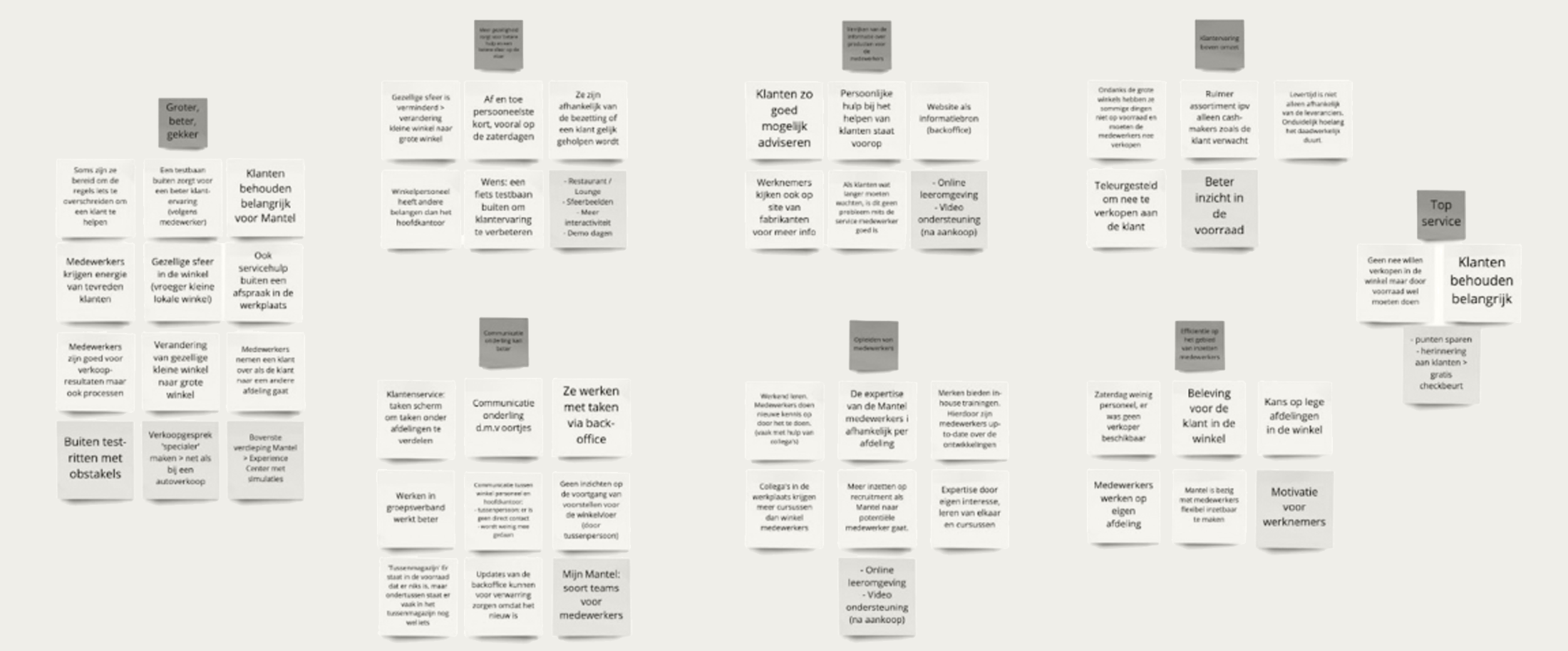

Design mentorship ~ synthesis
In the end we look at all collected data points from the research from a holistic point of view. The synthesis of the data points leads to the identification and naming of the opportunities that exist.
We then enter the 2nd diamond...‹›‹›
-

Idea panorama
-

Concept sketch
-

Concept sketch
-

Concept sketch
-

Storyboard
The subtle art of concepting
We define a concept as a refined notion developed through analysis. Although it is a lot of fun, this extensive analysis is not the easiest process and involves a lot of sketching and scratching, thinking and letting go, joining and tearing apart, getting feedback while finding words for the subconscious flood of thoughts.
In order to stimulate lateral thinking and a divergent mindset each team member goes through an iterative cycle of four conceptstudies. Each iteration we add theoretical perspectives such as:
- Seductive and Persuasive Technology
- Behavioral Change
- Flow
- Social Interaction and Game Mechanics
Each concept becomes tangible using Hasso Plattner Institute prototyping cards. This is not just a fun and intuitive activity, but the most essential act of team-based learning.
In the end each team has about 20 concepts. These converge into 3 final concepts, presented to our clients.
Sketch, Prototype, Test, Repeat
After defining the concept we start with quick design iterations. This starts with Lo-fi pen and paper sketches evolving to more detailed wireframes to define screen layouts and flow and finalizing it in advanced prototyping tools like FIGMA, Adobe XD & Protopie in order to design and tweak the interactions. Prototypes are tested and improved in quick iterations.
During this phase, we focus on supporting and developing fundamental design skills. To this end, we facilitate just-in-time workshops with topics in the field of:
- Conversational Design
- Mobile Patterns
- Action/Memory/Flow
- Spatial & Transitional interfaces
- UX Copy
- Micro-interactions
By means of weekly Design Panels we teach our participants to use this theoretical knowledge in the substantiation of the designs.
-

Final Concept
-
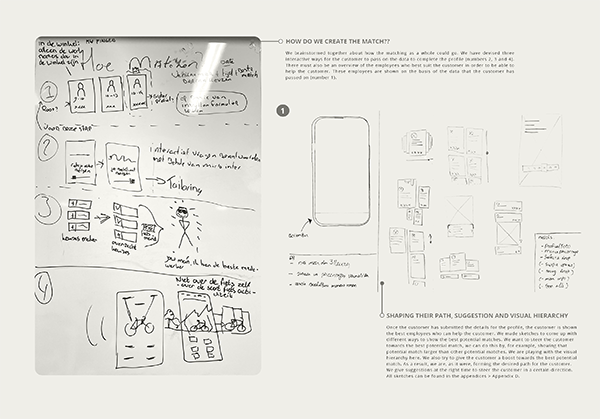
Concept sketch
-
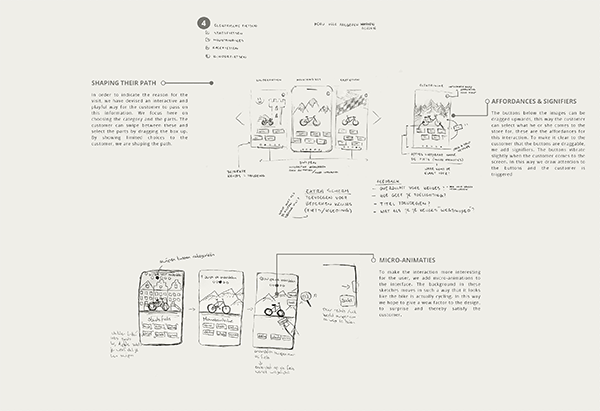
Concept sketch
-
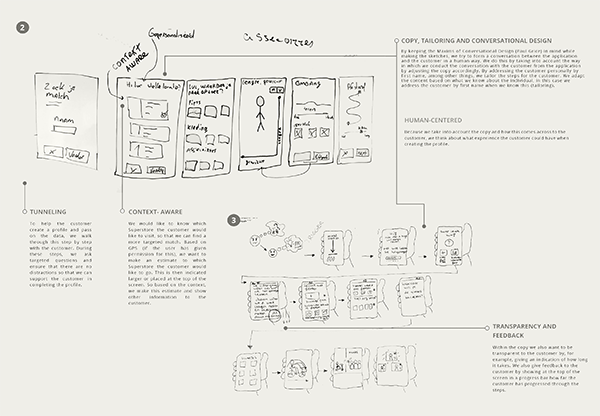
Concept sketch
-

HIFI Wireframes
Final products and assessment
In this module we deliver hands-on experience in service and opportunity design. Our participants have the opportunity to design for renowned brands and and build a strong portfolio during their studies. The module is completed with a portfolio assessment in which the participants reflect on their growth and learning experience. In this assessment, together with the participant, we determine the next steps in their development.
Mantel
Mantel Match
How can we enrich our services on location by further integrating the Superstore and the Webshop, and how can we support our (service) employees even better by using mobile devices?
KLM
Together
Travelers going on holiday with a group often find it difficult to choose activities that everyone enjoys. This concept allows them to make suggestions for activities to each other. Fellow travelers can then vote for or against this suggestion.
Mobgen
Energy Challenges
‘Go Green’ is a game that makes the user more aware of their energy consumption. The player can save energy by achieving personal and shared goals, this will give them with rewards that they can spend on new energy-saving devices.
Pathé
Movie Reviews
Cinema visitors can record and share their own interactive movie reviews after their Pathé cinema visit.
ING
Stacks
How can we make young people and students aware of the importance of saving? With stacks, young people challenge each other to adjust their spending pattern.
Selection of workshops


